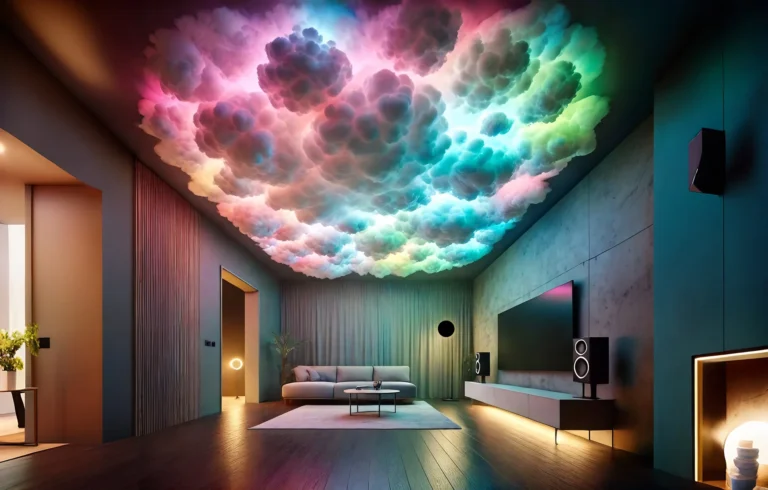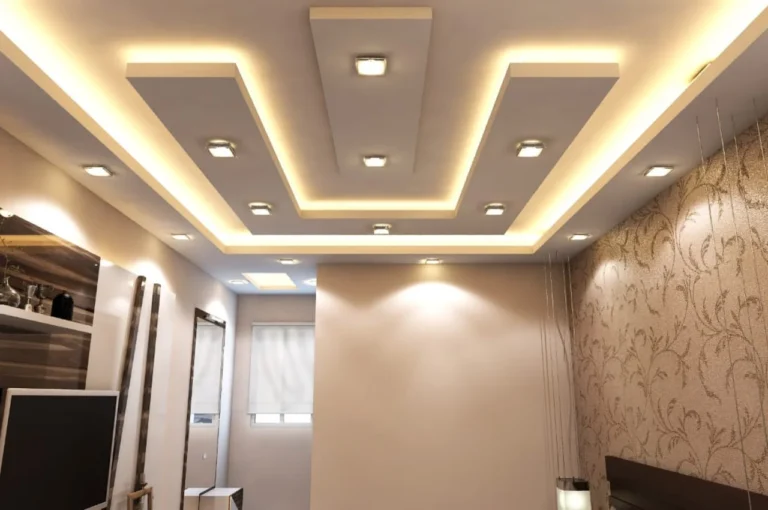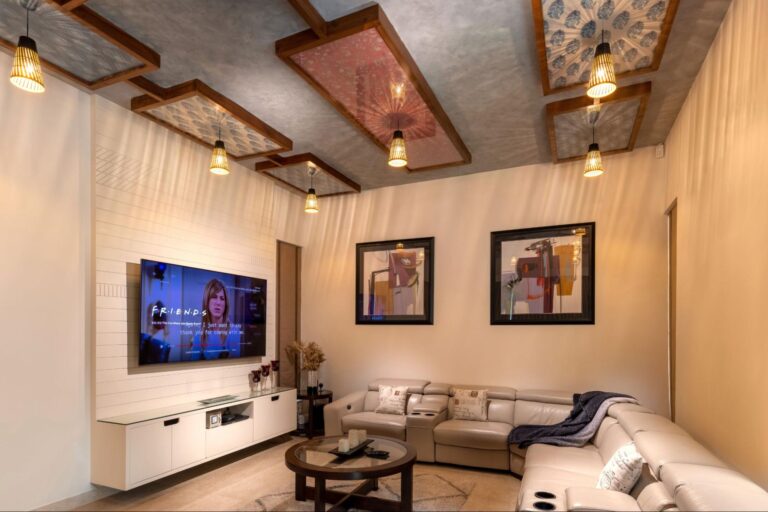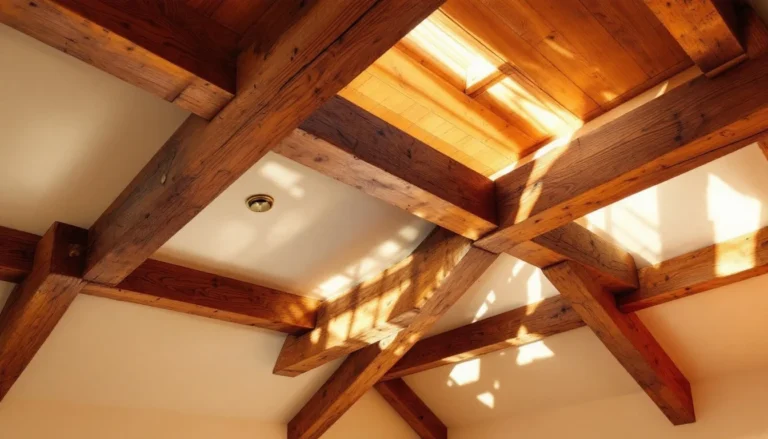
In any office, the ceiling is often the most overlooked surface — yet a thoughtful office false ceiling design can transform the entire feel of a workspace. You’ll love how office false ceiling design can hide wiring and ducts, improve acoustics, and create zones within an open plan. Picture a conference room with a sleek suspended ceiling, recessed lights, and a modern grid, or a home office with a coffered ceiling that adds depth and sophistication. From minimalist white panels to dramatic wood slats, the fifth wall matters.
From offices with round ceiling lights to conference rooms with recessed fixtures, from empty rooms with sliding glass doors to elegant spaces with modern furniture and lighting, these office false ceiling design inspirations celebrate the art of the overhead. Let’s look up — each idea proof that what’s above you is just as important as what’s below.
1. Sleek Overhead – A Desk with a Modern Ceiling
Unfurl this office interior where a clean, modern false ceiling frames the workspace below. This office false ceiling design uses recessed lighting and a grid pattern to define the desk area. You’ll love how the ceiling adds structure without distracting from the work surface.
A suspended ceiling with integrated lighting is a classic office false ceiling design. It hides ductwork and wires while providing even, glare-free illumination. Choose white panels for a clean, professional look.
2. Focused Light – A Desk Beneath a Statement Ceiling
Notice the lighting — a focused beam or diffused glow from a false ceiling above a desk and computer monitor. This office false ceiling design directs light where it’s needed most. You’ll appreciate how the ceiling improves task lighting and reduces eye strain.
Task lighting integrated into a false ceiling is a smart office false ceiling design. Use adjustable downlights above desks and workstations. The ceiling becomes a functional tool, not just decoration.
3. Collaborative Zone – Two Desks Under a Shared Ceiling
Step into this collaborative space — two desks and chairs in front of a painting, all beneath a unified false ceiling. This office false ceiling design creates a visual zone for teamwork. You’ll love how the ceiling ties the two workstations together.
In an open office, use false ceiling grids to define zones. A dropped ceiling over a cluster of desks creates a sense of intimacy and focus. Use different ceiling heights to differentiate departments.
4. Executive Office – Black Leather Chairs and a Refined Ceiling
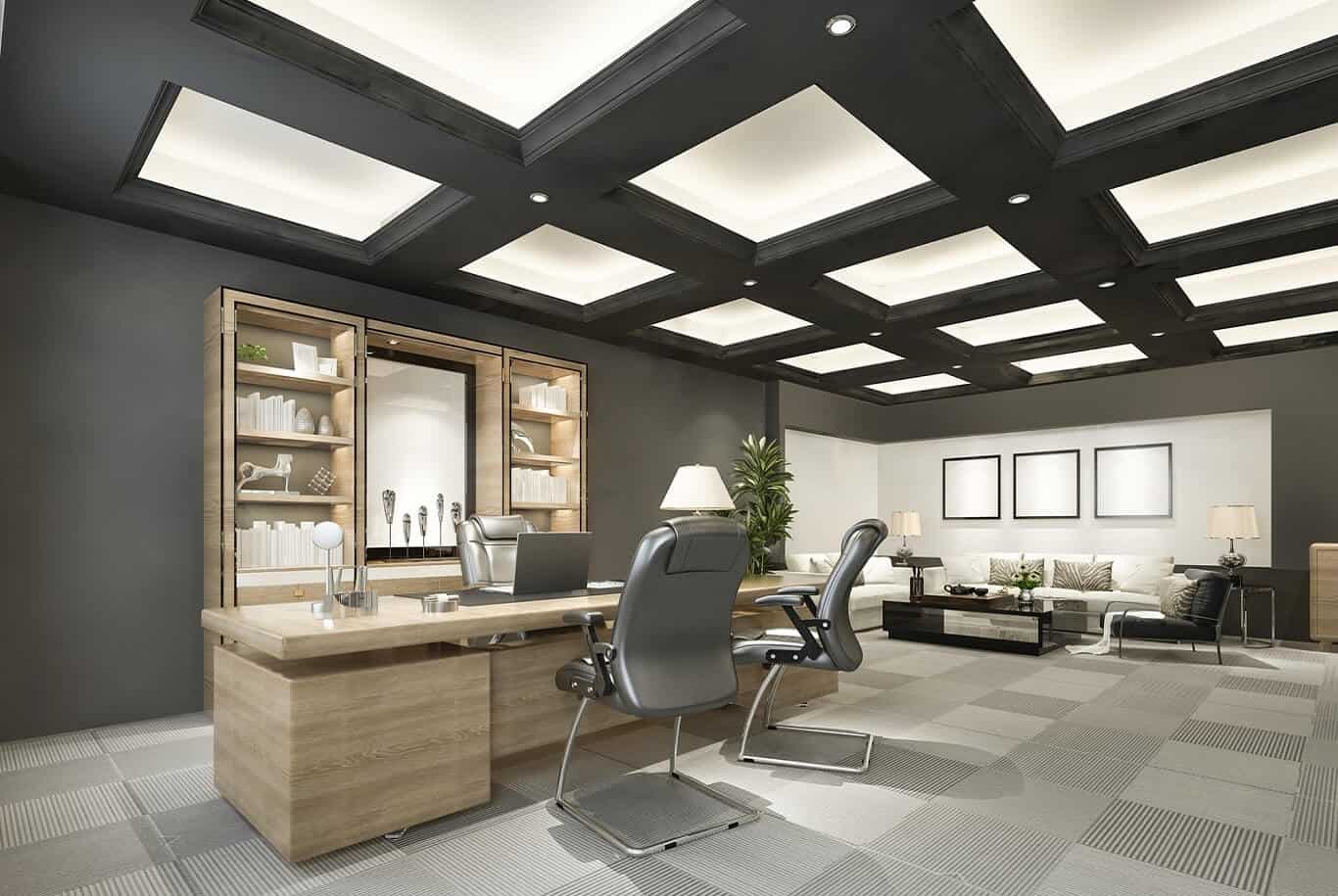
See the executive office — black leather chairs, bookcases, and a false ceiling that adds warmth and sophistication. This office false ceiling design might use wood panels or a coffered grid. You’ll appreciate how the ceiling elevates the room’s formality.
For an executive office, choose a false ceiling with wood accents or a coffered pattern. The ceiling should feel substantial, not industrial. Combine with warm lighting for a welcoming atmosphere.
5. Symmetrical Layout – Two Chairs Flanking a Desk
Notice the symmetry — two chairs on either side of a desk, all under a balanced false ceiling. This office false ceiling design uses linear lights or a grid to reinforce the room’s order. You’ll love how the ceiling mirrors the furniture arrangement.
Use ceiling design to reinforce your office layout. Linear lights can mirror the line of a desk. A grid can echo the placement of chairs. The ceiling and floor should speak the same design language.
6. Round Light – A Circular Feature in the Ceiling
Look at the round light — a circular LED or recessed fixture in a false ceiling. This office false ceiling design adds visual interest and provides soft, diffused light. You’ll appreciate how the round shape breaks up the linear grid.
A circular or oval light fixture can be a focal point in a office false ceiling design. Use it above a conference table or in a reception area. The curve softens the room’s angles.
7. Empty Canvas – Lights and a Sliding Glass Door
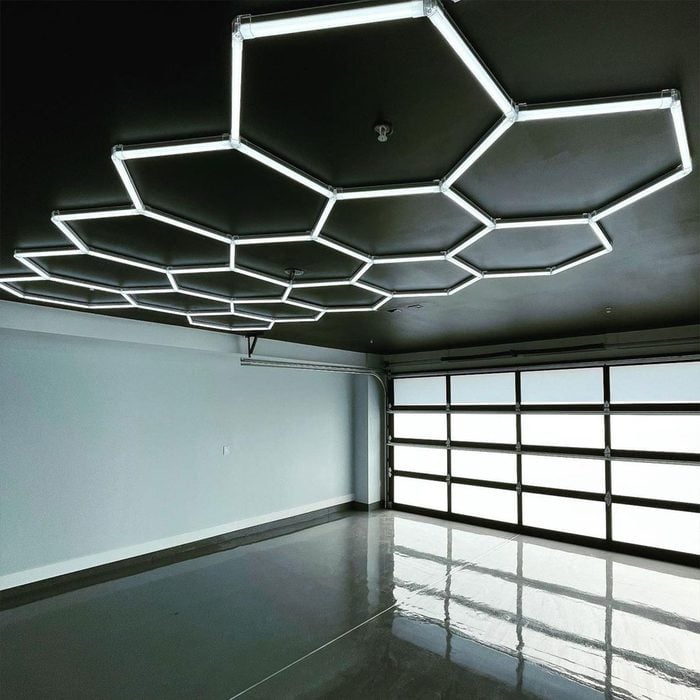
Step into this empty room — false ceiling lights illuminating a space with a sliding glass door. This office false ceiling design focuses on even, shadow-free lighting. You’ll love how the empty room lets you see the ceiling’s effect without furniture.
When planning an office false ceiling design, test the lighting in an empty room. You’ll see the pattern and coverage clearly. Then add furniture, knowing the light will fall where needed.
8. Elegant & Modern – Furniture and Lighting in Harmony
Admire this elegant office — modern furniture and a false ceiling with integrated lighting. This office false ceiling design is sleek and seamless, the lights flush with the ceiling panels. You’ll love how the room feels both bright and calm.
For a high-end look, choose a false ceiling with flush-mounted LED panels. The light should be even and glare-free. Use a white or light grey finish to reflect light and make the room feel larger.
9. Conference Ready – Black Chairs and Plants Under a False Ceiling
See the conference room — black chairs arranged around a table, plants adding life, all under a false ceiling. This office false ceiling design uses recessed lights to illuminate the table. You’ll appreciate how the ceiling focuses light on the meeting area.
In a conference room, the false ceiling should highlight the table. Use recessed downlights spaced evenly above the table surface. The rest of the room can be in softer, ambient light.
10. Clean & Ready – A Multi-Use Space with a False Ceiling
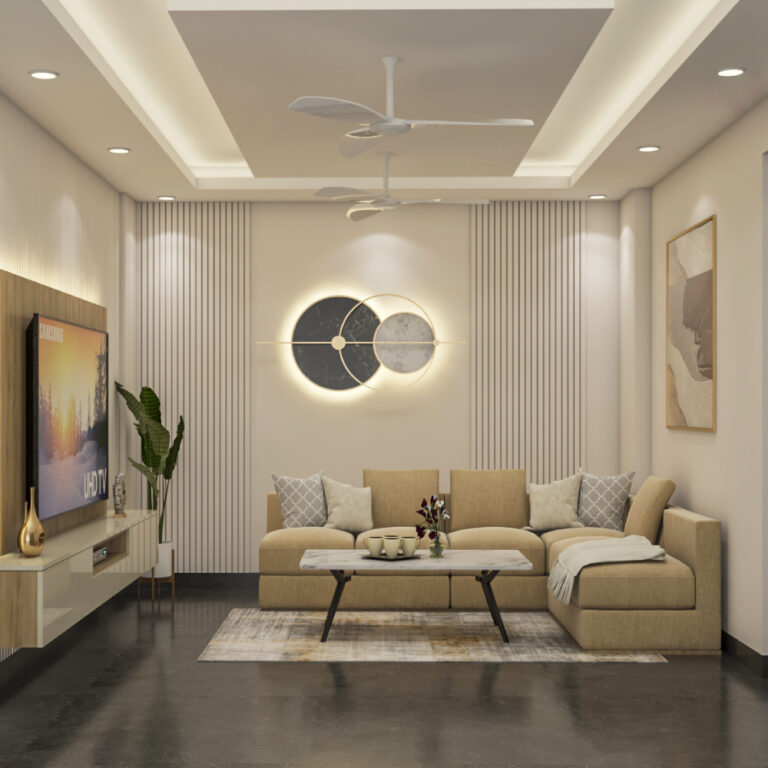
Step into this clean room — a living room that could be an office, all under a false ceiling. This office false ceiling design is versatile, the lighting adapting to different uses. You’ll love how the ceiling’s neutral design works for any function.
A versatile false ceiling design uses a grid of lights on dimmers. You can adjust from bright (work mode) to soft (relaxation). The ceiling itself should be neutral — white or light grey — to suit any activity.
11. Central Focus – Tables, Chairs, and Couches Under One Ceiling
Notice the open plan — tables, chairs, and couches grouped in zones, all under a single false ceiling. This office false ceiling design unifies the space while allowing flexibility. You’ll appreciate how the ceiling ties together different work areas.
In an open office, a single false ceiling design can create cohesion. Use a uniform grid or panel type throughout, with lighting zones that can be controlled separately. The ceiling becomes the visual constant.
12. Formal Meeting – Chairs Around a Large Table
See the formal conference room — chairs around a large table, a false ceiling with focused lighting above. This office false ceiling design uses directional lights to highlight the table. You’ll love how the ceiling makes the table the star.
For formal meetings, the false ceiling should cast light evenly across the table surface. Avoid shadows on faces. Use adjustable downlights or a linear pendant above the table center.
13. White on White – A Bright, Seamless Ceiling
Admire the white ceiling — seamless with the white walls, creating a bright, open feel. This office false ceiling design is minimalist and modern. You’ll appreciate how the ceiling disappears, letting the furniture and people take center stage.
A white false ceiling with flush LED panels is the most versatile office false ceiling design. It reflects light, makes the room feel larger, and works with any decor. The ceiling should be felt, not seen.
14. Breakout Space – Couches Under a Statement Ceiling
See the breakout area — green and yellow couches, a false ceiling with playful lighting. This office false ceiling design uses color or pattern to define the lounge zone. You’ll love how the ceiling adds energy to the casual space.
In a breakout or lounge area, the false ceiling can be more playful. Use colored lights, a patterned grid, or a dropped ceiling with a unique shape. The ceiling tells you this is a different kind of space.
15. Bright Conference – White Chairs Around a Large Table
Look at the bright conference room — white chairs around a large table, a false ceiling with abundant light. This office false ceiling design is airy and inviting. You’ll appreciate how the ceiling makes the room feel larger and more open.
For a bright, modern conference room, choose a white false ceiling with lots of recessed lights. The ceiling should be at least 8 feet high to avoid a cramped feeling. Light colors reflect light; dark ceilings absorb it.
16. Grand Scale – A Large Table Surrounded by Chairs
Notice the grand scale — a large conference table with chairs around it, a false ceiling that matches the room’s importance. This office false ceiling design might use a coffered or tray ceiling for added drama. You’ll love how the ceiling commands attention.
For a high-stakes conference room, invest in a more architectural false ceiling. A coffered grid, wood slats, or a sculptural dropped ceiling will impress clients and create a sense of occasion.
17. Home Office – A Living Room Doubling as Workspace
Step into this hybrid room — a living room filled with furniture and decor, also used as an office. The false ceiling is residential in style, with warm lighting. This office false ceiling design proves that work can happen anywhere.
For a home office, choose a false ceiling that matches your home’s style. Warm, indirect lighting is better than harsh overheads. The ceiling should feel cozy, not commercial.
18. Art-Focused – A Large Painting Above a Desk
See the art wall — a large painting behind a desk, a false ceiling lighting the artwork. This office false ceiling design uses picture lights or directional cans to highlight the painting. You’ll appreciate how the ceiling makes the art the focal point.
Use adjustable recessed lights in your false ceiling to accent art on the walls. The lights should be on a separate dimmer from the general lighting. Your office can feel like a gallery.
19. Awaiting Meetings – An Empty Conference Room
Look at this empty conference room — leather chairs around a flat table, a false ceiling ready for action. This office false ceiling design is clean and professional. You’ll love how the empty space lets you see the ceiling’s pattern and lighting plan.
When designing a conference room, plan the false ceiling before the furniture. The lights should be centered over where the table will go. The ceiling grid should align with the table’s orientation.
20. Material Focus – A Ceiling Made of Unique Materials
Study this ceiling material — perhaps wood, metal, or fabric panels making up the false ceiling. This office false ceiling design uses texture and color for impact. You’ll love how the material choice changes the room’s entire personality.
Don’t limit yourself to white panels. A false ceiling can be made of wood slats (warm), metal tiles (industrial), or fabric (soft). The material should reflect your brand or personal style.
21. Colorful Home Office – White Cabinets and a Blue Accent Wall
See this home office — white cabinets, a blue painted wall, and a false ceiling that keeps the space feeling open. This office false ceiling design uses a simple white grid to avoid competing with the colorful wall. You’ll appreciate how the ceiling recedes, letting the blue shine.
In a room with a strong wall color, keep the false ceiling neutral. White or light grey panels will not compete. The ceiling should be a quiet backdrop, not a distraction.
22. Wood & Work – Wooden Shelves and Desks Under a False Ceiling
Admire this warm office — wooden shelves and desks, a false ceiling that complements the wood. This office false ceiling design might use wood-look panels or a white grid that doesn’t clash. You’ll love how the ceiling supports the room’s organic feel.
If your office has a lot of wood, choose a false ceiling that is neutral (white or cream). The ceiling should not compete with the wood; it should let it shine. Use warm lighting to enhance the wood tones.
📐 Overhead Efficiency Compass: 6 Fresh Blueprints for Office False Ceiling Design
- 💡 The Grid Alignment Rule: In office false ceiling design, align your light fixtures with the workspace below. Downlights should be centered over desks, not between them. In open offices, use a 4×4 or 5×5 foot grid of lights. Use a laser level to mark positions before installation. Misaligned lights create shadows and uneven illumination.
- 🎨 The Acoustics Consideration: A false ceiling isn’t just about looks; it’s about sound. In office false ceiling design, choose acoustic panels (fiberglass or mineral fiber) to reduce echo and noise. In open offices, sound-absorbing panels are essential for focus. The ceiling is a primary tool for acoustic control, not just lighting.
- 🕯️ The Color Temperature Rule: In office false ceiling design, choose the right color temperature for each zone. Workstations need cool white (4000K-5000K) for alertness and focus. Break areas need warm white (3000K) for relaxation. Use a consistent temperature across the same room. Avoid mixing warm and cool in one space.
- 📏 The Plenum Depth Necessity: A false ceiling requires a plenum (the space between the true ceiling and the false ceiling). In office false ceiling design, plan for at least 12-18 inches of depth to accommodate wiring, ducts, and lighting. If your ceiling is low (under 8 feet), consider a surface-mounted system or a minimal drop.
- 🔲 The Panel Standard: Standard suspended ceiling tiles are 2×2 or 2×4 feet. For office false ceiling design, 2×4 tiles are more common in commercial spaces. Choose tiles with a smooth, cleanable surface. Avoid textured or residential-grade tiles, which look cheap and trap dust. The ceiling should be easy to clean and maintain.
- 🧩 The Zone Method: Use your false ceiling to define zones in an open office. Drop the ceiling lower over quiet work areas, keep it higher over circulation paths. Use different tile colors or patterns for different departments. The ceiling becomes a wayfinding tool, not just a cover.
Frequently Asked Questions
Q: How low should a false ceiling be in an office?
Ans: In office false ceiling design, the finished ceiling height should be at least 8 feet (96 inches). Lower than that, and the room feels cramped. If your true ceiling is 9 feet, a false ceiling dropping 12 inches leaves you at 8 feet — the minimum. For a comfortable, airy feel, aim for 9 feet or higher. If your original ceiling is low (8 feet), consider a surface-mounted system that adds minimal depth.
Q: What is the most cost-effective false ceiling for an office?
Ans: The most cost-effective office false ceiling design is a standard suspended grid with mineral fiber tiles (2×2 or 2×4). These tiles are inexpensive, easy to install, and provide good acoustics. Avoid custom shapes, wood, or metal, which cost significantly more. For a small office, consider a drywall drop ceiling with integrated LED lights. The grid system is the industry standard for a reason — it works, and it’s affordable.
Q: Can I install a false ceiling in a rented office?
Ans: Yes, but you need landlord approval. In a rented office, choose a suspended grid system that attaches to the existing ceiling with wires and hooks — no permanent damage. The system can be removed at the end of your lease. Avoid drywall or glued-on panels. Always get written permission, and hire a professional installer. A removable false ceiling is a great way to improve lighting and acoustics without losing your deposit.
Q: How do I maintain a false ceiling in an office?
Ans: In office false ceiling design, maintenance is simple. Dust the tiles every 6 months with a soft brush or vacuum with a brush attachment. For stains, use a mild soap and water solution on a soft cloth — never soak the tile. Replace damaged tiles individually (they are modular). Check for water stains, which indicate a leak above. A well-maintained false ceiling lasts 10-20 years.
Q: What are the best lights for an office false ceiling?
Ans: The best lights for office false ceiling design are LED recessed downlights (for general lighting) and linear LED panels (for task lighting). Choose lights with a high CRI (90+), a color temperature of 4000K (neutral white) for work areas, and a diffuser to reduce glare. Use dimmable lights to adjust brightness. Avoid fluorescent tubes — they flicker, hum, and are energy-inefficient. LED is the standard for modern offices.
Conclusion
You’ve explored twenty-two office false ceiling design spaces — from sleek suspended grids to warm wood-look panels, from conference rooms with recessed lights to open offices with acoustic tiles. Each idea proves that the ceiling is not just a utility; it’s a design opportunity. A well-planned false ceiling hides unsightly ducts, improves acoustics, provides even lighting, and can even define zones in an open plan. The best office false ceiling design is the one you don’t notice — until you realize how good the light feels, how quiet the room is, and how professional the space looks.
Now it’s your turn to look up. Assess your office’s ceiling height, lighting needs, and acoustic challenges. Choose a grid system, select tiles (acoustic, white, wood-look), and plan your lighting layout. Hire a professional installer if needed. Your office false ceiling design will transform how the room feels — brighter, quieter, and more focused. The work you do below will benefit from the structure above. So look up, plan wisely, and create a ceiling that works as hard as you do. ⬜