There is a reason we feel awe when walking into a room with soaring ceilings — the vertical space speaks to something ancient and freeing inside us. An open ceiling, whether vaulted, beamed, or exposed, transforms a room from a box into an experience. You’ll discover that removing a traditional ceiling or raising its height does more than add square footage; it adds light, air, and a sense of possibility. Like standing in a canyon with nothing but blue sky above, an open ceiling makes you feel both small and expansive at once.
These open ceiling ideas will inspire you to look up and reimagine the fifth wall. From vaulted living rooms with exposed wooden beams to farmhouse spaces with shiplap ceilings, from modern industrial lofts with open ductwork to cozy kitchens that flow into two-story spaces, you’ll learn how to use height to create drama, warmth, and connection. Like a meadow that opens to the sky, your home can breathe, gather light, and lift your spirits every time you walk through the door.
1. Open Office Loft: Exposed Ceiling for Creative Flow
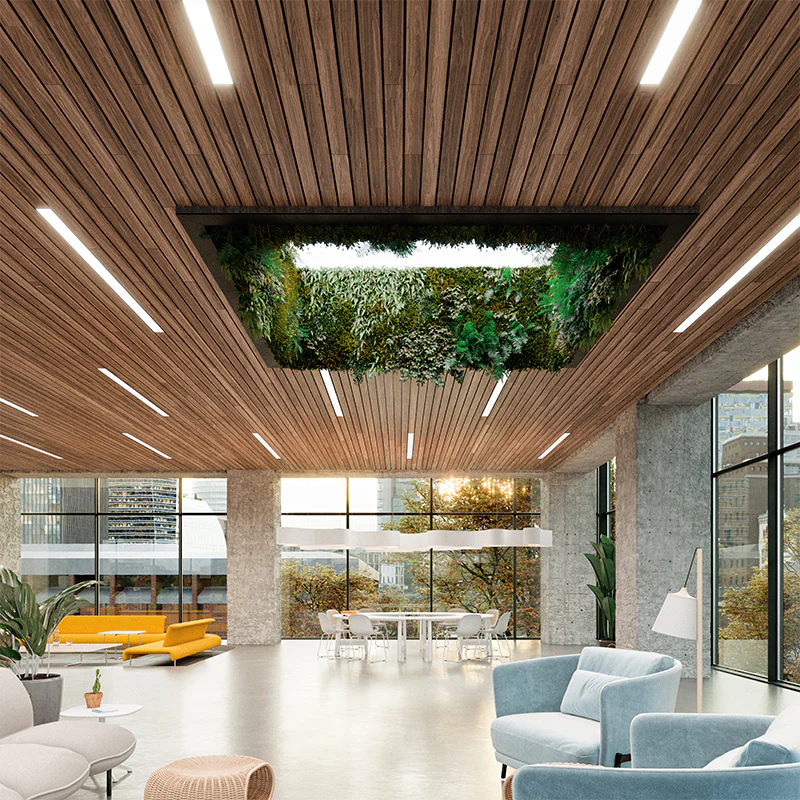
Design an office space with an exposed, open ceiling where ductwork, sprinklers, and wooden beams are left visible. This industrial open ceiling style creates an airy, collaborative atmosphere — the height prevents that cramped, stuffy feeling common in traditional offices. You’ll love how the vertical space encourages big thinking, and how the raw materials add texture without needing drywall, like a workshop under a vaulted barn roof.
An exposed open ceiling in an office is both practical and inspiring. The height allows for better air circulation and natural light distribution. Paint the exposed elements black or white for a cleaner look, or leave them raw for an industrial feel. The openness reduces echo and creates a sense of freedom that closed ceilings can’t match. Your team will feel less confined, and ideas will flow more freely.
2. Vaulted Living Room: Furniture Anchoring a Soaring Space
Fill a vaulted living room with substantial furniture — a large sectional, oversized armchairs, a substantial coffee table — to keep the space from feeling cavernous. This balanced open ceiling approach uses the height for drama while the furniture provides grounding. You’ll appreciate how the high ceiling makes the room feel grand, but the cozy furniture keeps it from feeling like a warehouse, like a canyon with a comfortable campfire at its center.
An open ceiling living room needs furniture with visual weight. Choose pieces with low, wide profiles that anchor the space. Add a large area rug to define the seating area. Hang a statement light fixture at a lower height to bring the eye down. The goal is to celebrate the height while creating intimate zones within the volume. Too much empty space feels cold; the right furniture makes it feel like a grand lodge.
3. Open Concept with Vaulted Ceiling: Living & Kitchen United
Remove the ceiling over both the living room and kitchen, creating one continuous vaulted space that connects the two zones. This unified open ceiling design makes a small footprint feel much larger. You’ll love how the shared height creates a sense of togetherness — someone cooking can still feel part of the living room conversation — like a meadow where all the wildflowers share the same sky.
An open concept open ceiling works best when the ceiling follows the roofline, reaching its highest point over the center of the combined space. Use consistent flooring and paint colors to reinforce the flow. The kitchen island can be lower, while the living room sofa area can be oriented to take advantage of the height. The result is a home that feels twice its actual square footage.
4. Windows Climbing the Wall: Light-Filled Vaulted Room
Install tall windows that climb up the wall, following the line of your vaulted open ceiling. This architectural choice floods the room with natural light and makes the height even more dramatic. You’ll adore how the windows frame the sky and trees outside, bringing the outdoors in, and how the light changes throughout the day, like a sundial marking time on the walls.
Windows are the best friend of an open ceiling. If you’re building or renovating, extend window heights to within 6-12 inches of the ceiling line. Use sheer window treatments that can be pulled fully open to maximize the view. The combination of vertical windows and an open ceiling makes even a modest room feel like a cathedral. The play of light on the tall walls is its own ever-changing art installation.
5. Warm Modern: Vaulted Ceiling with Wood Accents
Cover your vaulted open ceiling with warm wooden planks or beams, contrasting with white walls and modern furniture. This combination keeps the modern aesthetic from feeling cold. You’ll appreciate how the wood overhead adds warmth and texture, and how the vaulted shape draws the eye up to the beautiful grain, like the underside of a forest canopy.
Wood is a natural partner for an open ceiling. It adds warmth to the volume and softens acoustics. Use wide-plank pine, cedar, or reclaimed barn wood. For a modern look, space wood beams evenly across a white-painted vaulted ceiling. The contrast between the warm wood and white walls is striking. The ceiling becomes a feature, not just an afterthought.
6. Statement Chandelier: A Sculpture in the Open Space
Hang a dramatic, oversized chandelier or a cluster of pendant lights from your open ceiling, lowering it to human scale. This lighting trick fills the vertical void and creates a focal point. You’ll love how the fixture seems to float in the open space, and how it provides intimate lighting even in a cavernous room, like a campfire glowing in a dark valley.
Lighting an open ceiling requires scale. A single tiny fixture will look lost. Instead, choose a large chandelier (at least 24 inches wide), a cluster of 5-9 pendants at varying heights, or a long linear fixture over a dining table. Use a dimmer to adjust from bright to moody. The fixture should hang so its bottom is 7-8 feet above the floor — low enough to feel connected to the space, high enough not to block views.
7. Wooden Beams: Rustic Character in an Open Ceiling
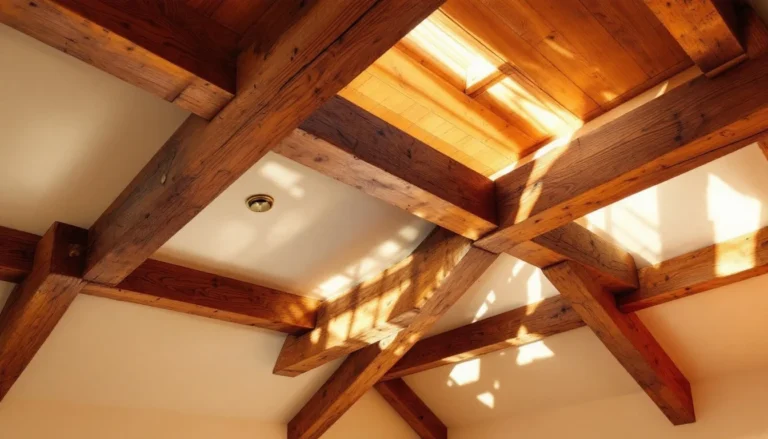
Add rough-hewn wooden beams across your open ceiling, either structural or decorative, to bring rustic warmth and architectural interest. These beams visually break up the expanse of drywall and add a sense of history. You’ll appreciate how the beams create rhythm across the ceiling, and how their natural imperfections tell a story, like the rings of an ancient tree.
Beams are a classic element of open ceiling design. Use them to define zones in a large open plan — one direction over the living area, perpendicular over the dining area. Faux beams (hollow boxes) are lighter and easier to install than solid timber. Paint or stain them to match your floor or furniture. The beams draw the eye upward and add architectural heft to an otherwise plain ceiling.
8. Farmhouse Open Ceiling: Shiplap & White
Cover your open ceiling with white shiplap or beadboard for a classic farmhouse look that feels both rustic and airy. The horizontal lines of the shiplap make the space feel wider, while the white reflects light. You’ll love how the texture adds interest without darkening the room, like white clouds against a pale blue sky.
Shiplap on an open ceiling is a signature farmhouse feature. Run the boards perpendicular to the longest wall to make the room feel wider. Use matte white paint to keep the look soft and forgiving of imperfections. Add a few wooden beams over the shiplap for contrast. The combination is light, bright, and quintessentially farmhouse — perfect for a kitchen, living room, or primary bedroom.
9. Two-Story Living Room: Balcony Above & Open Below
Remove the floor above part of the living room, creating a two-story open ceiling with a balcony overlooking the space below. This dramatic architectural move is common in modern homes and loft conversions. You’ll adore how the balcony creates a connection between floors, and how the double-height space feels like a town square inside your home, with the balcony as its mezzanine.
A two-story open ceiling is a major renovation but the payoff is immense. Use the balcony for a library, a home office, or a cozy seating nook. Hang a dramatic chandelier that spans both heights. Use tall art or a large mirror on the high wall. The open volume makes the entire home feel more expansive and connected, like a canyon where you can see both the river below and the rim above.
10. Skylights: Bringing the Sky Inside
Add skylights to your open ceiling to flood the space with natural light from above. This is especially powerful in rooms with limited wall space for windows. You’ll appreciate how the skylights track the sun’s path across the ceiling, creating moving patterns of light, and how they make the room feel like it’s open to the sky, like a meadow with no roof at all.
Skylights transform an open ceiling into a living sundial. Install tubular skylights in darker corners. Use operable skylights for ventilation. For the best effect, place skylights on a north-facing roof slope for consistent, non-glaring light, or on the east side for morning sun. The connection to the sky — clouds, stars, birds — makes even the most ordinary room feel extraordinary.
11. Ceiling Fan: Practical & Stylish in a High Space
Mount a large ceiling fan on a downrod from your open ceiling, positioning it 8-9 feet above the floor. A high ceiling can trap warm air; a fan pushes it back down. You’ll love how the fan makes the room comfortable year-round, and how a stylish fan becomes a design feature in the vertical space, like a slow-moving mobile against the open sky.
Fans are essential in rooms with open ceiling height. Choose a fan with a downrod long enough to reach the optimal height. Look for fans with reversible motors — counterclockwise in summer for cooling, clockwise in winter to circulate warm air. Choose a fan with blades that complement your decor. The fan becomes a kinetic sculpture, constantly moving the air in your beautiful open space.
12. Open Ceiling Kitchen: Airing Out the Cooking Space
Raise the ceiling in your kitchen to create an open ceiling that prevents cooking odors and heat from lingering. An open kitchen ceiling allows steam and smells to rise and disperse. You’ll appreciate the improved air quality and how the height makes the kitchen feel less like a work zone and more like a gathering space, like cooking under the open sky.
A kitchen with an open ceiling benefits from a powerful exhaust hood that vents outside, plus the height to prevent grease buildup on upper walls. Use the vertical wall space for open shelving or a plate rack. Keep upper cabinets high to maintain the airy feel. The open kitchen ceiling is both practical and beautiful — it makes the heart of your home feel larger and more inviting.
13. TV Wall on a Tall Wall: Proportional Challenges
Mount a large TV on a tall wall in an open ceiling living room, but keep it at seated eye level (about 42 inches to the center). Resist the urge to hang it high like a sports bar. You’ll love how the low TV feels integrated into the seating arrangement, and how the wall above can hold art or shelves, balancing the visual weight, like a stream flowing beneath a high cliff.
In a room with an open ceiling, a TV mounted too high is a common mistake. Keep it at normal viewing height. Use the vertical space above for a gallery wall, a large piece of art, or floating shelves. The TV should not be the only thing on that tall wall. Balance it with other elements that draw the eye up and across, making the height an asset, not an awkward void.
14. Glass Walls & Open Ceiling: Bringing the Outside In
Install floor-to-ceiling glass doors or windows on one wall of a room with an open ceiling, blurring the line between inside and out. The glass allows the eye to travel from the high ceiling out to the sky, making both spaces feel larger. You’ll adore how the room feels like an open-air pavilion, and how the changing light becomes part of your daily experience.
Glass walls are the ultimate companion to an open ceiling. Choose sliding or folding glass doors that open completely to a patio or garden. Use minimal frames to maximize the view. The combination of the high ceiling and the glass wall makes the room feel like a covered patio — sheltered but open. It’s the closest you can get to sleeping under the stars while still having a roof.
15. Minimalist Open Ceiling: White, Bright & Uncluttered
Keep your open ceiling completely white — no beams, no skylights, no fans — for a minimalist, gallery-like feel. This pure approach lets the shape of the room shine. You’ll appreciate how the white ceiling reflects light, making the space feel even larger, and how the lack of visual clutter allows you to focus on the furniture and views, like a blank canvas that magnifies the art on it.
A minimalist open ceiling requires perfect drywall finishing and paint. Use flat or matte white paint to hide imperfections. The simplicity is the luxury — no beams to dust, no skylights to leak. This approach works best in modern homes where the architecture itself is the feature. The white volume becomes a vessel for light and life, nothing more, nothing less.
16. Exposed Trusses: Industrial Open Ceiling
Leave the structural roof trusses fully exposed in an industrial-style open ceiling, painting them black or white for a cleaner look. This raw approach celebrates the bones of the building. You’ll love how the trusses add geometric interest and a sense of history, and how the open structure makes the room feel like a renovated factory, full of character and space.
Exposed trusses are a hallmark of industrial open ceiling design. They work best in spaces with high ceilings to begin with. Paint them a contrasting color (black trusses against white ceiling) to make them pop, or the same color to let them recede. The trusses add rhythm and texture, and they tell the story of the building’s structure. It’s honest architecture, exposed and celebrated.
17. Tall Mirror: Reflecting the Open Ceiling
Lean or hang a tall, floor-to-ceiling mirror on a wall in your open ceiling room. The mirror will reflect the height and light, doubling the feeling of space. You’ll appreciate how the mirror makes the room feel even larger, and how it captures the chandelier, the beams, or the skylights, like a still pool reflecting a canyon rim.
A tall mirror is a powerful ally in an open ceiling room. Place it opposite a window to reflect the outdoors. Use it to double the apparent width of a narrow room. The mirror doesn’t just reflect — it multiplies. Every beam, every light fixture, every foot of height is doubled. It’s the cheapest way to make your open ceiling feel even more expansive.
18. Outdoor Open Ceiling: Pergola & String Lights
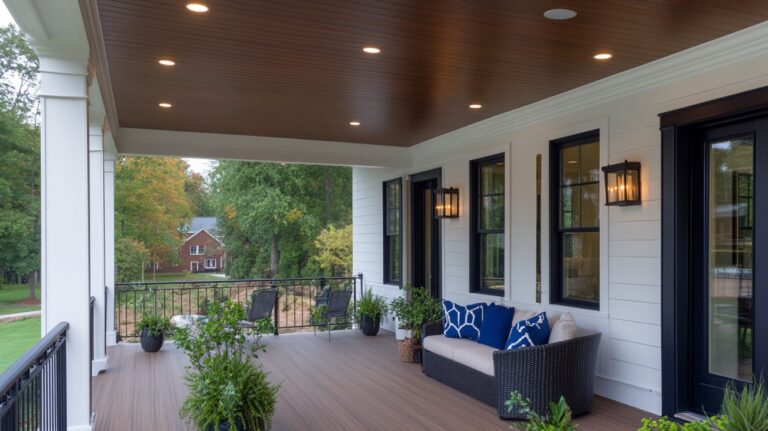
Create an outdoor living room with a pergola as your open ceiling, strung with warm string lights above wicker furniture. This semi-open ceiling gives you the feeling of being outside with a sense of shelter. You’ll adore how the lights twinkle overhead like stars, and how the pergola’s slats filter the sun, making the space feel like a forest clearing.
An outdoor open ceiling extends your living space. A pergola with a slatted roof provides dappled shade and a structure for lights, vines, or fabric. Use weather-resistant wicker furniture and outdoor cushions. The string lights create a magical canopy at night. It’s the best of both worlds — the freedom of open air with the comfort of a defined room.
19. Beadboard Open Ceiling: Subtle Texture
Install beadboard panels on your open ceiling for subtle texture that adds interest without overwhelming. The vertical lines of beadboard draw the eye along the length of the room. You’ll love how the material adds a cottage or coastal feel, and how the grooves catch light and shadow, like ripples on a sandy shore.
Beadboard on an open ceiling is a charming alternative to smooth drywall. Paint it white or a pale color to keep the space bright. The vertical lines make the ceiling feel higher and the room longer. It’s especially effective in porches, sunrooms, and beach houses. The texture is subtle but present — enough to know it’s there, not enough to dominate.
20. Stairs & Open Ceiling: Vertical Circulation as Design
Design a staircase that winds up through an open ceiling space, with a living wall of plants climbing beside it. This combination turns circulation into a destination. You’ll appreciate how the stairs and the open ceiling work together to draw the eye up, and how the plants soften the architecture, like ivy climbing a canyon wall.
An open staircase through a double-height open ceiling is a stunning architectural feature. Use floating stairs or stairs with glass railings to keep the view open. Install a living wall on the adjacent tall wall — a vertical garden that climbs with the stairs. The combination of movement (the stairs), life (the plants), and space (the open ceiling) is breathtaking. It turns a simple necessity into a work of art.
21. Dining Room Under an Open Ceiling: Intimate Grandeur
Place your dining table under an open ceiling, and hang a low, dramatic chandelier or a cluster of pendants over the table. The height above the table makes every meal feel like a special occasion. You’ll love how the open volume allows conversation to flow without feeling cramped, and how the low light fixture creates intimacy within the grandeur, like a candlelit dinner under a cathedral dome.
A dining room with an open ceiling can handle a larger table — don’t be afraid to go big. The chandelier should hang 30-36 inches above the table. Use a rug to define the dining zone within the larger space. The contrast between the intimate table setting and the soaring ceiling above is magical. It’s formal without being stuffy, grand without being cold.
🏗️ Apex & Architecture Almanac: 5 Essential Principles for an Open Ceiling
- 📐 Proportion is Everything: An open ceiling should feel intentional, not accidental. In a room with standard 8-foot ceilings, removing the ceiling entirely may require raising the roof line — a major renovation. In new construction or additions, plan the ceiling height based on the room’s width. A good rule: the ceiling height should be no more than 1.5 to 2 times the room’s width. A room that’s too tall and narrow feels like an elevator shaft; one that’s well-proportioned feels like a cathedral.
- 🪟 Light Control: An open ceiling often means more windows or skylights, which means more glare and heat. Plan for window treatments — even if you think you won’t use them. Install blinds or shades on high windows, ideally motorized for easy operation. Use low-E glass to reduce UV damage and heat gain. The open ceiling brings glorious light; manage it so it doesn’t bring discomfort.
- 🔊 Acoustic Consideration: An open ceiling can create echo and sound bounce. Hard surfaces (wood, tile, glass) reflect sound; soft surfaces (rugs, upholstered furniture, curtains) absorb it. In an open ceiling room, add large area rugs, heavy drapes, upholstered furniture, and even acoustic panels disguised as art. The volume needs softness to sound as good as it looks. A beautiful room that echoes is less beautiful.
- 🌡️ Heating & Cooling Strategy: Hot air rises. In an open ceiling room, that means heat collects at the top. Use ceiling fans (on low in winter, pushing warm air down) and consider a ductless mini-split or high-wall registers. Place thermostats at seated height, not up high. If you have a fireplace, the heat will rise dramatically — fans help push it back down. An open ceiling is beautiful but requires a HVAC strategy more thoughtful than a standard room.
- 🎨 Treat the Highest Point as a Feature: The apex of your open ceiling shouldn’t be a forgotten dusty corner. Paint it a slightly lighter color than the walls to make it recede, or a contrasting color to make it a feature. Add a decorative medallion, a light fixture, or a painted mural. The highest point of the room is the focal point when you look up — honor it. A beautiful apex finishes the room as much as a beautiful floor.
Frequently Asked Questions
Q: How much does it cost to create an open ceiling?
Ans: Costs vary wildly in open ceiling projects. Simply removing drywall to expose existing beams might cost $1,000-3,000 for labor and finishing. Vaulting a ceiling (removing attic space and raising the roof line) can cost $15,000-50,000+ depending on structural work. Adding skylights adds $1,500-5,000 each. For most homes, the most cost-effective open ceiling approach is to work with existing roof pitch — don’t try to raise the roof if you can work with what you have. Consult a structural engineer before removing any ceiling material.
Q: Can I have an open ceiling in a small room?
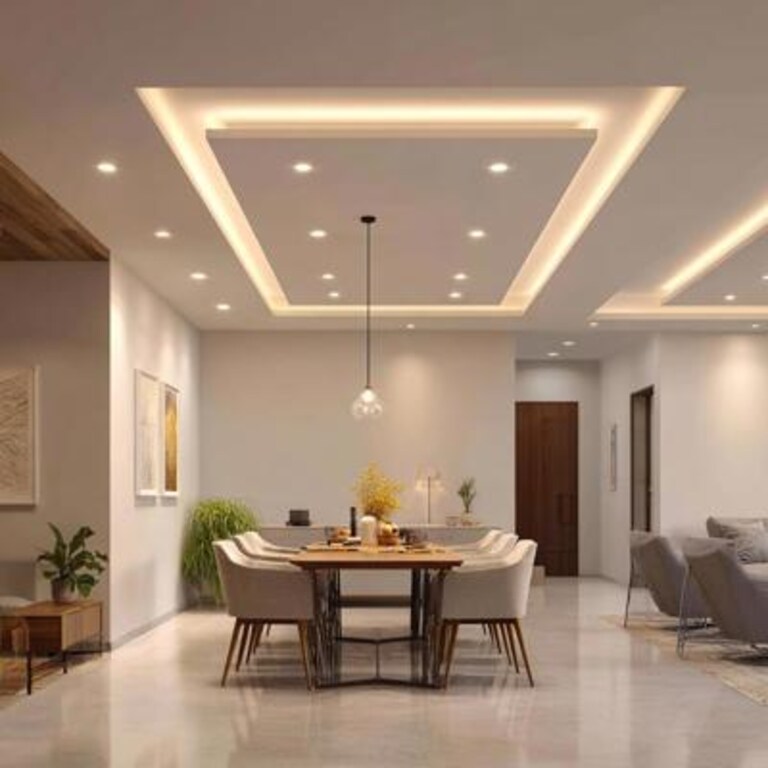
Ans: Yes — an open ceiling can make a small room feel larger, but proportion matters. In a very small room (10×10 or less), a full vaulted ceiling can feel like a silo. Instead, consider a tray ceiling (the center is raised but not all the way to the roof), or a coffered ceiling (a grid of beams). These give height without the extreme proportions. For tiny rooms, even a 9-foot ceiling feels more open than an 8-foot one — you don’t need a full vault to benefit from extra height.
Q: How do I clean an open ceiling with exposed beams?
Ans: Regular dusting is key for open ceiling maintenance. Use an extendable duster with a microfiber head to reach beams and high corners. For cobwebs, use a vacuum with a long hose attachment. For skylights, hire a professional or use a telescoping squeegee. For wood beams, occasional wiping with a barely damp cloth (then dry) keeps them fresh. The best strategy is to prevent buildup: dust every 2-3 months. A clean open ceiling continues to look expansive; a dusty one looks neglected.
Q: What’s the best insulation for an open ceiling?
Ans: For an open ceiling that is exposed to the roof, you need insulation between the rafters. Spray foam insulation is the gold standard — it has high R-value per inch, seals air leaks, and prevents condensation. Rigid foam boards with spray foam edges are second best. Fiberglass batts are least effective because they allow air movement. If you’re leaving structural beams exposed, insulate between them before installing the ceiling finish. Proper insulation makes your open ceiling comfortable year-round.
Q: Will an open ceiling make my home harder to heat and cool?
Ans: Yes, an open ceiling can increase heating and cooling costs because you’re conditioning a larger volume of air. However, good design minimizes the impact. Use ceiling fans to destratify air (push warm air down in winter). Install high-return vents to pull hot air out in summer. Use a zoned HVAC system. In a well-designed open ceiling home, the increased comfort and beauty often outweigh the slightly higher utility bills. The key is not to avoid open ceilings but to design them with energy in mind — insulate well, use fans, and manage solar gain.
Conclusion
You have looked up through a gallery of open ceiling designs — from vaulted living rooms with exposed beams to industrial lofts with open trusses, from farmhouse shiplap to modern two-story spaces with balcony overlooks. Each image whispered the same truth: a room is not just about the floor and walls; the ceiling is the fifth wall, and when you open it, you open the entire room. Like a canyon that reveals the sky, an open ceiling brings light, air, and a sense of freedom that no amount of square footage on the ground can match.
Now it is your turn to look up at your own ceilings and dream. Go find a beam to expose, a skylight to add, or a fan to install. Your open ceiling journey may be as simple as painting the existing ceiling a lighter color, or as grand as a full renovation. Either way, the direction is the same — up. The sky is the limit, and your home is waiting to breathe. 🏠✨🌤️